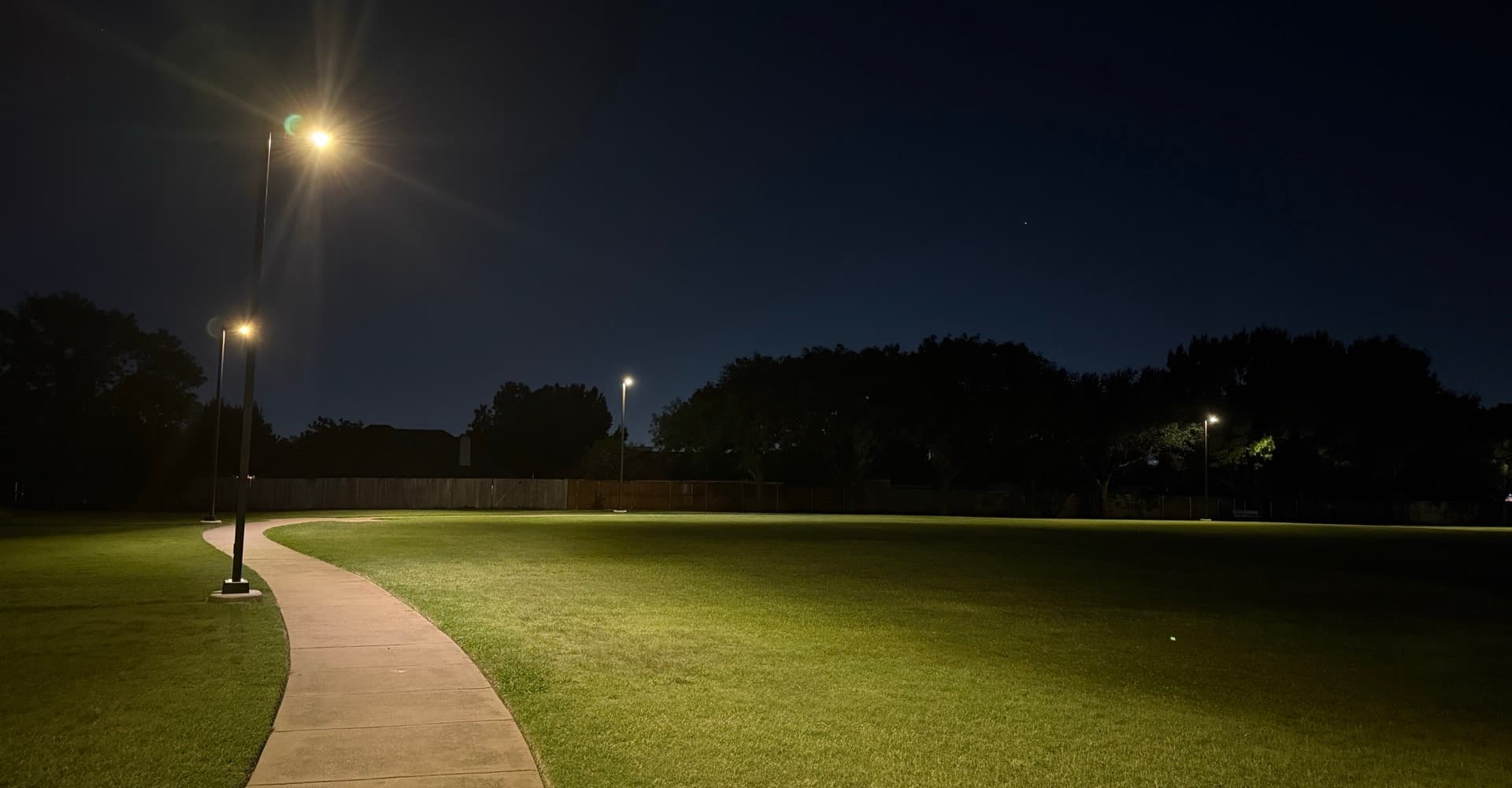
The Grid-Free Greenbelt
As a leader shaping the future of the Dallas-Fort Worth Metroplex, you are likely feeling the pressure of our region's rapid expansion. From the trail systems in Plano to the community parks of Fort Worth, the demand for safe, accessible green spaces has never been higher. However, you know all too well that the logistical hurdles of traditional infrastructure can often stall these essential projects.
Adding lighting to your pathways can become cost-prohibitive if power needs to be trenched over long distances. Between rising copper prices and the labor-intensive nature of electrical work, the total cost of a single park expansion can quickly exceed your quarterly budget. Commercial-grade solar lighting offers a way out of this difficulty, but only if it is approached with the fiduciary care your city deserves.
The Economic Reality of Grid-Free Lighting
For most DFW municipalities, the primary barrier to park safety isn't the light fixture—it's the electrical work. Trenching through established landscapes, boring under paved trails, and navigating existing utility lines often cost more than the lighting system itself.
By taking your park illumination off the grid, you eliminate these infrastructure costs and gain a critical layer of resiliency. During periods of grid instability or extreme weather events—an increasing concern for North Texas—your solar-powered assets remain operational. This provides your residents with a safe harbor of illumination when the traditional grid fails, ensuring that community safety is not a variable of the weather.
The Critical Importance of Solar Site Evaluation
While we get plenty of sunshine in North Texas, you cannot rely on that alone to guarantee a successful installation. The viability of your system depends entirely on how much sunlight lands where the pole is standing during peak collection hours.
The potential problem is one of the most attractive features of our DFW parks: trees.
Mature pecan and oak trees can deal a crippling blow to energy collection. It is a common misconception that "partial sun" is enough. In reality, over 50% of a typical day’s energy collection occurs during the critical mid-day hours of 10:00 AM to 2:00 PM. If a solar panel is shaded during this window, the system will struggle to keep the lights on through the night. An expert partner can complete a thorough site evaluation to identify these obstacles before you invest, ensuring the design accounts for the specific tree lines and structures unique to your park.
Design Confidence Through Photometric Analysis
The most common failure point in municipal solar projects is not the hardware; it’s poor application design. A "one-size-fits-all" approach leads to dark spots that compromise safety or batteries that fail during the shorter days of winter.
At Voss Lighting, we believe quality lighting design is the cornerstone of your project's success. We utilize advanced photometric analysis and 3D modeling to allow you to visualize the light distribution across your playground or trail before a single hole is dug. This engineered approach gives you confidence that the proposal meets specific foot-candle requirements for safety while accounting for the unique solar harvest potential of our North Texas landscape.
The Hidden Costs of Waiting
Postponing the modernization of park lighting often results in compounding liabilities that far outweigh the initial investment:
- Safety and Liability Risks: Poorly lit trails are statistically higher-risk areas for accidents and security incidents, increasing your municipality's exposure.
- Infrastructure Degradation: Delaying the transition from aging wired systems leads to increased emergency repair costs and "band-aid" fixes that fail to address root systemic issues.
- Escalating Energy Costs: As traditional utility rates fluctuate, the long-term cost of operating grid-tied high-pressure sodium or metal halide fixtures continues to drain municipal budgets.
- Loss of Community Trust: Public perception of park safety is directly tied to visibility. Facilities that remain dark after sunset often see a decline in utilization and community engagement.
Transitioning to a Turnkey Partnership
The complexities of solar technology—balancing battery capacity, panel surface area, and intelligent controllers—require a move away from simple out-of-the-box solutions. To protect your investment, you need a turnkey partnership that manages the entire lifecycle of the project.
Voss Lighting provides the purchasing power of a national leader combined with the localized accountability of a partner who understands the DFW landscape. We give you a single point of contact for any concerns related to the project, at any point in the lifecycle, from design to installation.
Ensuring Long-Term Stewardship
You’re thinking beyond this quarter or fiscal year to the best long-term decision. Choosing high-performance solar solutions is an act of financial responsibility, trading short-term capital expenditure for decades-long operational savings and enhanced public safety. When you view park lighting as an asset rather than a commodity, the focus shifts from the lowest initial bid to the highest total value.
Regional Site Audit
The first step in optimizing your park facility is understanding its current potential. Rather than a generic sales quote, we invite you to a comprehensive site audit. This assessment provides you with a clear baseline of your current conditions and a roadmap for a tailored, engineered solution that aligns with your city’s safety standards and sustainability goals.